
Engineering Resilience: How We Manufactured the DEWALT Pro Tool Backpack
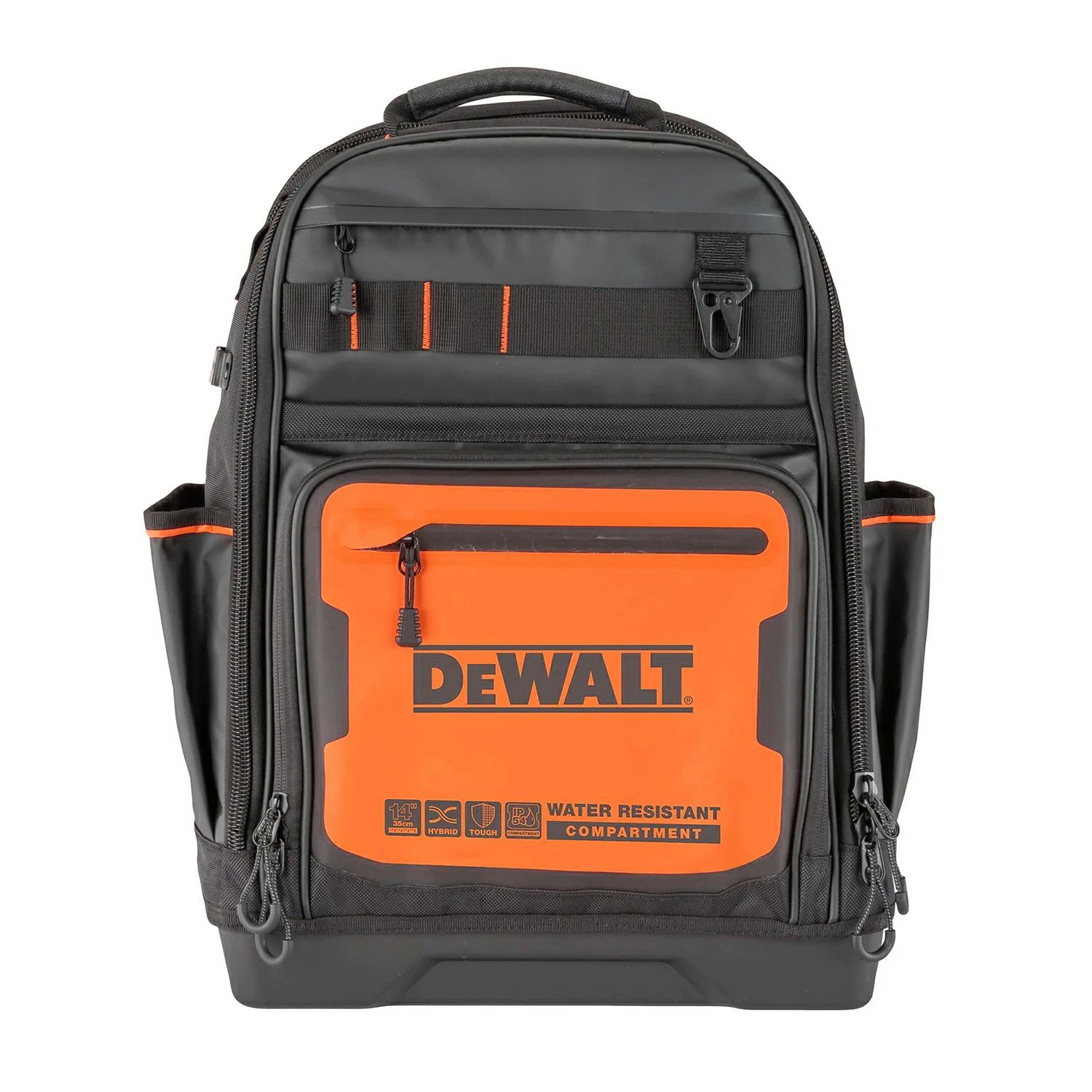
Project Specifications
Client Brand: DEWALT
Product: Pro Tool Backpack
Manufacturer: Dingfeng iBagcase
Core Material: 1680D Ballistic Nylon + Impact-Resistant Polymer Base
Key Requirement: 25kg Load Capacity & IP54 Water Resistance
The Manufacturing Challenge
Producing "Pro-grade" gear is fundamentally different from standard consumer luggage. The Pro Tool Backpack presented a specific engineering paradox: combining a flexible textile body with a rigid, industrial-grade plastic base.
For the Dingfeng production team, this project presented three critical hurdles:
The "Hard-Soft" Bond:
Stitching thick 1680D fabric directly into a waterproof injection-molded base (The "Tub"). Standard sewing machines cannot penetrate the plastic rim without needle deflection or breakage.
High-Density Organization:
The bag features 43 individual pockets. The tolerance for internal panel alignment is less than 2mm; any variance causes the outer shell to warp and distort.
IP54 Compliance:
The "Valuables Compartment" required a dust and water-resistant seal that strictly meets IP54 standards, demanding precision beyond typical sewing methods.

Our Technical Solutions
As the OEM partner, we retooled our production line to meet DEWALT’s "Guaranteed Tough" standards.
1. Heavy-Duty Fabrication (1680D Ballistic Nylon)
Standard 600D polyester fails under jobsite abrasion. We processed 1680 Denier Ballistic Nylon for the main chassis.
Process Insight: To handle this density, we utilized Automated Laser Cutting rather than die-cutting. The laser instantly cauterizes the nylon edges, preventing the fabric from unraveling during the complex assembly of the 43 internal pockets.
Equipment: Assembly was performed using Walking Foot Sewing Machines equipped with heavy-gauge nylon thread (Ticket 20 or 40), ensuring the feed mechanism pulls the thick layers evenly without puckering.
2. The Waterproof Base Integration
The signature feature is the impact-resistant base that protects tools from puddles and mud.
The Fix: We designed a custom sewing jig to hold the molded base at a 90-degree angle. This allowed our operators to stitch the fabric body directly into the pre-molded channel of the polypropylene base.
Result: A mechanical lock-stitch bond that is far superior to glue, ensuring the base never separates from the bag, even when fully loaded with 25kg of power tools.


3. IP54 Compartment Construction
For the designated Tech/Phone pocket:
RF Welding: Instead of standard stitching, we used RF (Radio Frequency) Welding for the internal waterproof liner.
Sealing: We installed inverted coil zippers with a PU (Polyurethane) matte coating to prevent water ingress, ensuring sensitive electronics remain dry in dusty or rainy environments.
4. Load-Bearing Reinforcement
To prevent strap failure under heavy loads:
Bar-Tack Reinforcement: We applied high-density Bar-tack stitching (42-stitch cycle) at all anchor points—specifically where the shoulder straps meet the yoke and at the webbing handles.
Ergonomics: The back panel uses 3D Air-Mesh foam padding, thermoformed to create airflow channels, reducing heat buildup for the user.
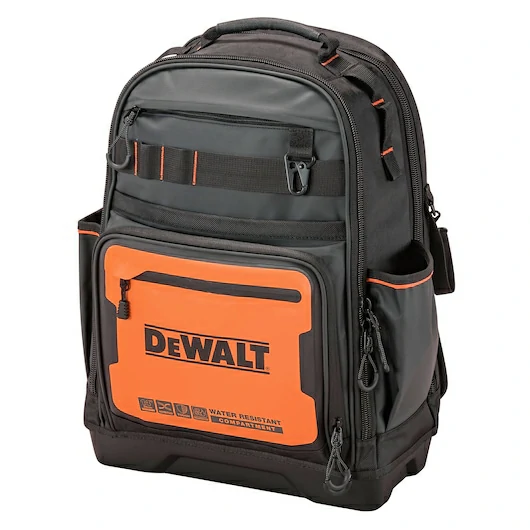


Quality Assurance (QC) Outcomes
Before leaving the Dingfeng iBagcase factory, the production lot underwent rigorous testing:
Drop Test: Loaded with 25kg iron weights, dropped from 1 meter to verify the plastic base does not crack.
Handle Jerk Test: The top handle underwent 1,000 cycles of sudden lift force.
Zipper Torture Test: U-shaped pullers were tested for smooth operation even when grit was introduced to the tracks.
Conclusion:
This project highlights Dingfeng iBagcase's capability to deliver high-specification, mixed-material products. We successfully translated a complex industrial design into a mass-produced reality with a near-zero defect rate.
SEND INQUIRY
Featured Products


