
Choosing the Right Logo Technique: A Guide to Defining Your Brand's Physical Identity
author: Nina Yang
2026-02-28

When you are developing a custom bag&case, the logo is often the final detail on the spec sheet. However, it’s the first thing your customer sees. Choosing the wrong branding method doesn't just look "off"—it can lead to durability issues in the field, affecting your brand’s reputation.
At Dingfeng, we’ve helped hundreds of clients navigate these choices. Here is a breakdown of the most effective branding methods to help you decide which fits your next project.
1. Silk Screen Printing: The Versatile All-Rounder
Screen printing is the go-to for many of our OEM projects, especially for high-visibility branding on Oxford fabric or nylon. By pushing ink through a mesh stencil, you get a vibrant, flat finish that sits clean on the fabric.
Best for: Large logos, vibrant colors, and high-volume production.
The Advantage: It offers unmatched color precision. If your brand relies on a specific Pantone shade, screen printing is the most reliable way to achieve it. It is also the most cost-effective solution for large orders.
The Trade-off: While modern inks are highly durable, screen printing can eventually peel or crack if the bag is constantly folded or exposed to harsh chemicals.
Pro Tip: We recommend this for "general use" bags where budget and color pop are the priorities. So if your brand is about "fast" fashion or high-visibility graphics, this is your go-to.
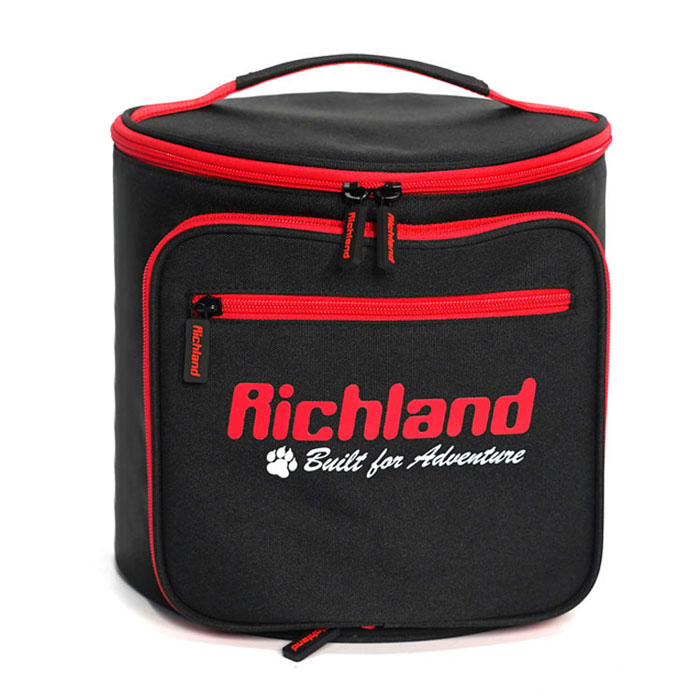
2. Embroidery: The Premium Heavy-Duty Choice
For rugged environments—like construction sites or mechanical workshops—embroidery is the gold standard. It uses high-sheen thread to stitch your logo directly into the material. It adds weight, dimension, and a sense of permanence that ink simply can't match.
Best for: Heavy-duty tool bags and professional gear.
The Advantage: Indestructibility. An embroidered logo will likely outlast the bag itself. It adds a 3D tactile texture that communicates "premium quality" to the end user. It won't fade in the wash or scratch off against a concrete floor.
The Trade-off: It’s not ideal for extremely fine text or complex gradients. It also requires a "backing" inside the bag, which we usually hide behind a lining.
Pro Tip: If you want your brand to be perceived as a "pro-grade" tool, go with embroidery. Also, for a "heritage" feel, nothing beats the tactile quality of a stitched logo.

3. Embossing & Debossing: The Sleek, Industrial Signature
Sometimes, the strongest statement is made without any color at all. Debossing (pressing the logo into the material) and embossing (raising it out) rely on shadow and depth. If your project involves EVA hard cases or synthetic leather, embossing (raising the surface) or debossing (indenting the surface) offers a sophisticated, integrated look.
Best for: EVA molded cases, tech organizers, and leather accents.
The Advantage: Since the logo is physically molded into the material, it is permanent. It’s a "subtle" form of branding that feels high-end and professional. There's no ink to scratch and no threads to snag.
The Trade-off: It's monochromatic—you aren't adding color, you are adding texture.
Pro Tip: For a "stealth" or "industrial" look on an EVA shell, debossing is unbeatable. This also works best on thick, structured materials like PU (Synthetic Leather) or Microfiber. It’s for the brand that doesn't need to scream its name to be noticed.

4. Rubber/Metal Patches: The Premium Upgrades
When a brand needs to convey a sense of ruggedness or high-end precision, we often move away from traditional stitching and toward molded attachments. For brands looking to stand out, adding a separate patch can significantly increase the perceived value of the bag.
Best for: PVC/Rubber: Tactical gear, 4x4 gear, and heavy-duty outdoor equipment where mud, water, and grit are constant factors.
Metal Plates: High-end instrument cases, luxury tool kits, and premium "special edition" collections.
The Advantage: Both options are virtually immune to the elements. PVC patches won't fray or absorb water, while metal plates provide a "lifetime" branding solution that won't wear down. They are waterproof, dirt-resistant. So these surfaces can be wiped clean in seconds, keeping the brand looking new even in dirty environments.
The Trade-off: Both require a one-time tooling/mold cost, meaning your upfront "set-up" costs will be higher. The mold opening process also takes a relatively long time, usually requiring 2 to 4 weeks.
Pro Tip: If you are building a brand for extreme environments, choose PVC patches with a recessed sewing channel; it protects the thread from being abraded. For executive-level professional gear, a brushed aluminum or zinc alloy plate with a matte finish provides a sophisticated, understated look that screams "precision engineering."

Branding Technology Comparison Matrix
| Logo Method | Silk Screen Printing | Embroidery | Embossing /Debossing | PVC / Rubber Patch | Metal Plate |
| Cost | Lowest | Moderate | Low | Mold fee | Mold fee |
| Attachment Method | Direct Ink Application | Thread Stitching | Heat & Pressure Molded | Sewn-on (via groove) | Rivets or Strong Adhesive |
| Best Material | Fabric/TPU | Heavy fabric | EVA / Leather | All Fabrics | Rigid Shells/heavy fabric |
| Tactile Feel | Flat & Smooth | Textured & 3D | Recessed / Integrated | Rubbery & Flexible | Hard, Cold, Luxury |
| Weather Proof | Fair (Can fade/crack over time) | Good (Resistant to abrasion) | Excellent (Permanent) | Perfect (Water/Mud proof) | Perfect (Corrosion resistant) |
Which should you choose?
The decision usually comes down to two questions: What is the base material? and Where will the bag be used?
Outdoor/Construction: Go with Embroidery or Rubber Patches.
Retail/Promotional: Screen Printing offers the best ROI.
High-End Precision Gear: Metal Plates or Embossing provide the cleanest finish.
Still undecided? Choosing the right branding is part of our "360°Guarantee." Contact us and send your logo files today, our team will provide a digital mock-up showing which technique will perform best for your specific design.
Custom Bag MOQs Unlocked: Insider Secrets Every Buyer Needs to Know
Back to Work 2026: Custom Bag Manufacturing Resumes After Spring Festival
Related Article

This article explores how accessibility, organization, and workflow can improve equipment bag design. Learn how thoughtful pocket layouts, custom compartments, and practical storage features help users keep tools and equipment organized, access essentials quickly, and work more efficiently.
The Future of Equipment Storage: Accessibility, Organization, and Workflow
Get ahead on your 2027 product plans. Understand the custom bag development process and how early preparation helps keep your project on track.
Planning Ahead for 2027: Starting Your Custom Bag Development Early
China's Mid-Autumn Festival and Golden Week create a tight production window for Q4 orders. Discover why custom bag lead times can extend beyond standard production schedules, how to plan backward from your delivery date, and why fall is a good time to start developing your 2027 products.
Mid-Autumn & Golden Week 2026: The Manufacturing Reality Behind Q4 Delivery Dates

This article explores how custom lid organizers and padded divider systems can transform unused hard case space into practical, high-value storage. By improving organization, accessibility, protection, and workflow efficiency, these interior solutions enhance the user experience while helping brands create more premium, versatile, and marketable hard case products.
Maximizing Hard Case Storage: How Lid Organizers and Divider Systems Turn Dead Space into Value