Custom Case Interior Engineering: CNC Foam Inserts vs. Molded EVA Trays
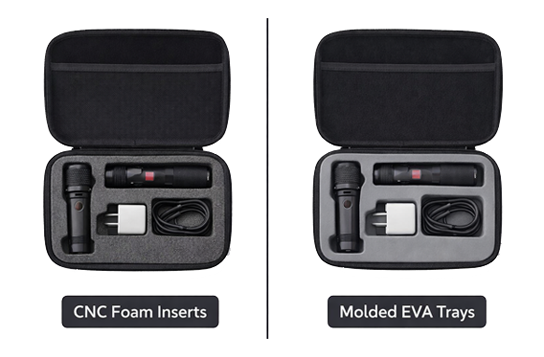
When it comes to custom inserts for protective cases—whether for tools, electronics, cameras, medical gear, or high-value equipment—one decision trips up nearly every client: CNC-cut foam inserts or molded (hot-pressed/compression-molded) EVA trays? While both offer excellent protection, they serve very different business goals. Here is a breakdown of the "Interior Engineering" behind these two heavyweights to help you decide which fits your current production stage.
Option 1: CNC-Cut Foam Inserts-Flexible, Cost-Efficient for Small Batches
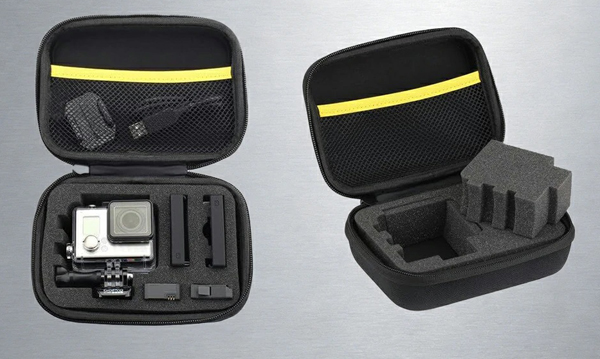
CNC foam inserts are made by digitally cutting foam blocks according to product dimensions. No molds are required, which makes this solution extremely flexible.
1. Speed to Market
Since there is no mold to cast, we can go from a CAD drawing to a finished insert in a matter of days. If your product design is still evolving, CNC allows you to make adjustments without "bricking" an expensive metal tool.
2. Zero Upfront Investment
For orders under 1000 units, the cost of a mold usually outweighs the savings on unit price. CNC allows you to keep your capital fluid while still providing a professional, snug fit for your product.
Option 2: Molded EVA Trays-Premium Appearance for Mass Production
Molded EVA trays are produced using heat-compression molds, creating a clean, structured interior with precise contours. It is the gold standard for "A-Class" packaging.
1. The "Premium" Factor
Molded EVA allows for rounded edges, tapered cavities, and embossed logos that CNC simply cannot replicate. The surface can also be laminated with velvet, jersey, or spandex for a soft-touch feel that screams quality.
2. High-Volume Efficiency
While the initial mold cost may range from several hundred to several thousand US dollars, the price per unit drops significantly compared to CNC. Once the mold is made, the production is fast, consistent, and much more cost-effective for runs of 3,000+ units.
Neither is inherently "safer"—it comes down to how well the cavity matches your product and the foam density chosen.

Here's a straightforward side-by-side sheet at the key trade-offs.
| Factor | CNC Foam Inserts | Molded EVA Trays |
| Mold Cost | None | Required |
| Unit Price | Moderate | Low (on high volumes) |
| Lead Time | Fast | Longer (due to mold making) |
| Aesthetics | Industrial, clean, utilitarian | Premium, sleek, feels more luxurious |
| Precision | High (Vertical cuts only) | Extreme (Organic 3D curves) |
| Best For | Low volume/Prototyping/Frequent design tweaks | Mass production/Luxury goods/Branded retail packaging |
Real talk from the shop floor: Many clients start with CNC-cut samples to validate fit and function. Once the design locks in and order quantities climb, they switch to molded trays to drop per-unit cost and elevate the perceived value.

Final Verdict: Which is right for you?
Choosing between these two comes down to a simple calculation of your current scale:
Go with CNC Foam if you are prioritizing flexibility and low startup costs. It's the smart move for B2B equipment, startups, and bespoke kits.
Go with Molded EVA Trays if you are prioritizing brand identity and long-term margins. It's the essential choice for luxury electronics and retail products where the "wow" factor drives sales.
Most of our clients end up using both at different project phases—starting with CNC to de-risk the design, then moving to molded for the full run.
Still not sure which interior design fits your product? Contact us and our team supports you from sketch design to mass production, ensuring the interior matches both the product and the market.
Written by Gary Zhang, a product developer at Dingfeng with nearly 10 years of experience in protective case design, focusing on custom EVA protective cases for electronics, instruments, and lifestyle products.
Enhancing Bag Hardware Durability: Zipper and Buckle Innovations for Heavy-Use Scenarios
EVA Lamination Surface Fabrics Explained: Spandex (Mutispandex) vs. PU vs. Oxford Fabric
Related Article