Enhancing Bag Hardware Durability: Zipper and Buckle Innovations for Heavy-Use Scenarios
In the world of custom bag manufacturing, "durability" is often used as a marketing buzzword. But at ibagcase, we define durability through the lens of failure prevention. For bags destined for heavy-use scenarios—whether it's tactical gear, industrial tool bags, or high-duty outdoor adventure storage—the hardware is almost always the first point of failure.
A broken zipper or a snapped buckle doesn't just inconvenience the user, it renders the entire product obsolete. Here is how we approach the technical evolution of hardware to ensure our bags withstand the rigors of real-world abuse.
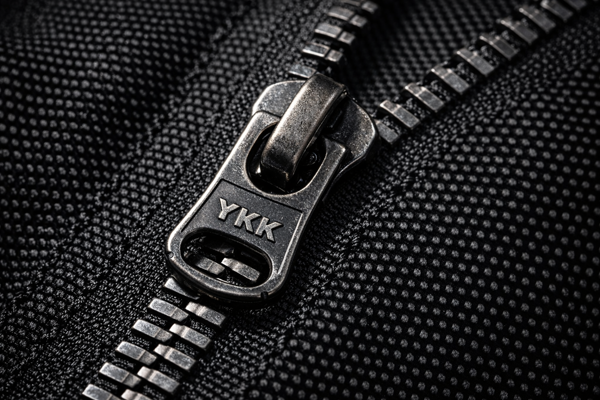
While we frequently integrate YKK® zippers into our builds, durability isn't just about the brand—it's about selecting the right series for the specific mechanical stress.
RC (Racquet Coil) Precision: For heavy-use storage, we often deploy YKK's RC series. Unlike standard coils, these feature a unique oval shape that nests the sewing thread into an indentation, protecting it from abrasion and preventing the zipper from "bursting" when the bag is overstuffed.
Corrosion Resistance: For bags used in humid or coastal environments, we implement advanced electroplating and specialized coatings. It's not just about aesthetics—it's about preventing the microscopic pitting that leads to "zipper drag" over time.

2. Buckle Innovation: Moving Beyond Standard Plastics
When a bag is dropped or stepped on, the buckles take the brunt of the impact. At ibagcase, we've moved beyond generic POM (Polyoxymethylene) plastics to more resilient materials and designs:
Acetal vs. Nylon: We prioritize high-grade Acetal for load-bearing buckles. Unlike nylon, which can absorb moisture and become brittle in extreme cold or lose rigidity in high heat, Acetal maintains its dimensions and "snap-fit" integrity across a massive temperature gradient.
Structural Reinforcement: We look for hardware with "bridge" reinforcements—internal ribbing within the buckle male/female ends that prevents the prongs from snapping under lateral torsion.

3. The Integration Factor: It's All in the Attachment
The strongest hardware in the world is useless if the attachment point fails. This is where the ibagcase manufacturing philosophy truly shines.
Box-Stitched Stress Points: We don't just sew hardware into a seam. We use reinforced "box-and-X" stitching patterns and high-tensile bonded nylon threads to ensure the fabric yields before the hardware attachment does.
Load Distribution: For heavy-duty shoulder straps, we often integrate metal D-rings with a matte PVD (Physical Vapor Deposition) finish. This provides a harder-than-steel surface that resists scratches and prevents the "metal-on-metal" squeaking that plagues lower-quality builds.

4. Rigorous Testing Protocols
We don't guess—we verify. Every batch of hardware used in our production undergoes:
Cycle Testing: Zippers are pulled thousands of times to ensure smooth operation without teeth misalignment.
Salt Spray Testing: Crucial for international shipping and outdoor use to ensure no oxidation occurs during the product's lifespan.
Tensile Strength Verification: Ensuring that every buckle meets the Newton-meter (Nm) rating required for the bag's intended load capacity.

The ibagcase Commitment
At ibagcase, we believe that the quality of a bag is measured by its weakest link. By obsessing over the technical details of zippers, buckles, and d-rings, we provide our clients with more than just a container—we provide a reliable tool that performs under pressure.
If you are looking to develop a product where failure is not an option, contact our engineering team to discuss the best hardware solutions for your next project.
By Sisilia Huang, Hardware & Materials Specialist
Dingfeng Company
I've been deep in bag hardware since 2017—sourcing, stress-testing, and iterating on zippers and buckles for packs that see serious mileage.
European Demand for Eco-Certified Bags: Opportunities Beyond Standard Compliance
Custom Case Interior Engineering: CNC Foam Inserts vs. Molded EVA Trays
Related Article