
European Demand for Eco-Certified Bags: Opportunities Beyond Standard Compliance
author: Aaron Zhou
2026-01-28

Sustainability is no longer a niche requirement in the European bag market. For many brands, eco-certification has become a baseline expectation rather than a competitive advantage. As regulations expand and buyers grow more sophisticated, the real opportunities now lie beyond basic compliance—in transparency, adaptability, and long-term partnership capability.
For manufacturers and suppliers, especially those serving OEM and private-label clients, understanding this shift is critical. This article explores how evolving European environmental standards—including extended chemical and material controls often compared to Prop 65-style frameworks—are reshaping demand, and how Dingfeng is positioning itself to meet these expectations.
Eco-Certification in Europe: From Requirement to Differentiator
European buyers are well acquainted with certifications such as REACH, RoHS, OEKO-TEX, and material-specific standards for recycled or bio-based inputs. In recent years, however, compliance alone has stopped being a selling point.
Many importers and brand owners now assume that:
Restricted substances are already controlled
Traceability documentation is available
Testing reports can be provided on request
What they look for next is risk reduction and brand protection.
This is where extended chemical management—sometimes loosely compared to Prop 65 extensions—comes into play. While Prop 65 itself is a U.S. regulation, European buyers increasingly apply similar internal blacklists, stricter threshold limits, and supplier audits that go beyond legal minimums.
What European Buyers Are Really Asking For
In sourcing discussions, the questions are changing. Instead of "Can you pass the test?", buyers now ask:
How early are materials screened for restricted substances?
Can formulations or components be adjusted for different EU markets?
How stable is the supplier's compliance system over time?
This shift creates new opportunities for suppliers who can demonstrate process control, not just certificates.
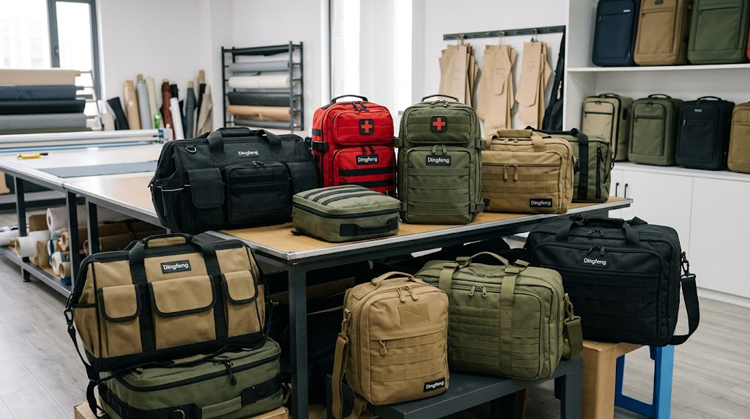
For bag manufacturers, especially in categories such as backpacks, travel bags, tool bags, and fashion accessories, this often involves:
Greater scrutiny of coatings, inks, and metal accessories
Preference for mono-material or simplified structures
Demand for recycled content with verifiable sourcing
Opportunities Beyond Compliance
Suppliers who treat eco-certification as a strategic capability—not a checklist—are gaining ground in Europe. Key opportunity areas include:
1. Early-Stage Material Collaboration
European brands increasingly want suppliers involved during product development, not after designs are finalized. This allows material choices to align with both sustainability goals and cost targets from the start.
2. Flexible Certification Pathways
Not all markets within the EU are the same. Suppliers who can adapt testing scope and documentation based on the target country or retailer requirements are seen as lower-risk partners.
3. Transparency as a Value Proposition
Clear communication about materials, processes, and limitations builds trust. Buyers value honesty more than over-promising certifications that add cost without real market benefit.
Dingfeng's Adaptation Path for the European Market
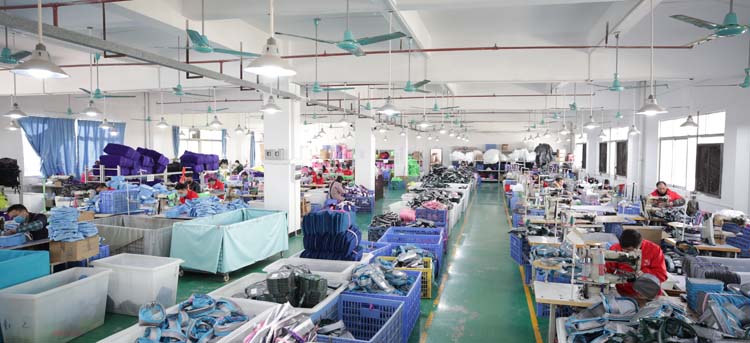
With over 20 years of experience in bag manufacturing, Dingfeng has evolved its approach alongside European market expectations.
Rather than focusing solely on passing final inspections, Dingfeng emphasizes front-end compliance and customization, including:
Material pre-assessment with suppliers to reduce downstream testing risks
Custom eco-solutions, such as recycled fabrics or low-impact alternatives, tailored to brand positioning
Documentation readiness, ensuring reports, declarations, and traceability records are organized and accessible
Design-for-compliance support, helping clients balance sustainability goals with durability and cost efficiency
Custom eco-solutions, such as recycled fabrics or low-impact alternatives, tailored to brand positioning
Documentation readiness, ensuring reports, declarations, and traceability records are organized and accessible
Design-for-compliance support, helping clients balance sustainability goals with durability and cost efficiency
Our goal is simple: move from "meets minimum" to "preferred partner" for European clients who value long-term collaboration over spot orders.
If you're a European brand, distributor, or retailer looking for a reliable manufacturing partner that understands these evolving requirements—and can deliver custom bags that exceed standard compliance—Contact us now for a no-obligation quote or material discussion. We're looking forward to building something lasting together.
The Smart Way to Source Reliable Bag Manufacturers in 2026: A Practical Guide
Enhancing Bag Hardware Durability: Zipper and Buckle Innovations for Heavy-Use Scenarios
Related Article

This article explores how accessibility, organization, and workflow can improve equipment bag design. Learn how thoughtful pocket layouts, custom compartments, and practical storage features help users keep tools and equipment organized, access essentials quickly, and work more efficiently.
The Future of Equipment Storage: Accessibility, Organization, and Workflow
Get ahead on your 2027 product plans. Understand the custom bag development process and how early preparation helps keep your project on track.
Planning Ahead for 2027: Starting Your Custom Bag Development Early
China's Mid-Autumn Festival and Golden Week create a tight production window for Q4 orders. Discover why custom bag lead times can extend beyond standard production schedules, how to plan backward from your delivery date, and why fall is a good time to start developing your 2027 products.
Mid-Autumn & Golden Week 2026: The Manufacturing Reality Behind Q4 Delivery Dates

This article explores how custom lid organizers and padded divider systems can transform unused hard case space into practical, high-value storage. By improving organization, accessibility, protection, and workflow efficiency, these interior solutions enhance the user experience while helping brands create more premium, versatile, and marketable hard case products.
Maximizing Hard Case Storage: How Lid Organizers and Divider Systems Turn Dead Space into Value