EVA Lamination Surface Fabrics Explained: Spandex (Mutispandex) vs. PU vs. Oxford Fabric
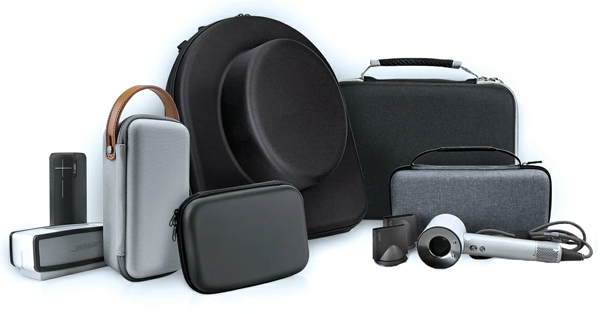
When manufacturing custom molded cases, the surface fabric plays a critical role in product performance, durability, and market positioning.
Unlike traditional sewing fabrics, while heavy-duty canvas is great for rugged utility, thermal compression (heat-press lamination) requires materials that can stretch, bond, and maintain their integrity under heat. Choosing the wrong surface fabric can result in peeling, surface damage, or reduced product lifespan.
This article explains the key differences between Mutispandex, PU fabric, and Oxford fabric when used for EVA lamination — based on real production and application experience.
What Is EVA Lamination and Why Surface Fabric Matters
EVA lamination is a heat-press bonding process where fabric is permanently fused onto molded EVA. Once laminated, the face material isn't just decoration — it becomes part of the product's functional structure.
Key factors affected by surface fabric choice include:
Hand feel and appearance
Abrasion resistance
Water resistance
Ease of cleaning
Target industry suitability
Quick Comparison Table (Real-World Lamination Performance)
| Item | Mutispandex (Spandex) | PU coated/laminated |
Oxford (polyester) |
| Initial Hand-feel | Extremely soft & silky | Smooth/Sleek | Rugged/Grained |
| Stretch/Elasticity | Good 4-way stretch | Almost none | Almost none |
| Durability | Moderate (Prone to snagging) | High (Scratch resistant) | Excellent (Abrasion resistant) |
| Easy to Wipe Clean | Average (stains penetrate) | Best – wipe & done | Good (especially coated) |
| Water Resistance | Basic (depends on treatment) | Excellent | Very good (with coating) |
| Best Market Positioning | Consumer lifestyle, fashion-oriented | Medical / hygiene / high-cleanliness | Heavy-duty / long-service-life |

1. Multispandex (Jersey Cloth): The "Premium Soft-Touch" Choice
This is a knitted polyester-spandex blend (often 85–95% polyester + 5–15% spandex), also called mutispandex or multi-spandex in many factories, offering a soft, premium "textile" feel.
The Advantage: It has excellent elasticity, which allows it to conform perfectly to complex molds with deep grooves or sharp corners without wrinkling. After lamination to EVA, it delivers the most luxurious, skin-friendly hand-feel. Products feel instantly "warm" and comfortable.
The Trade-off: Its biggest weakness is snagging (pilling). Because it is a knit, it can catch on sharp objects or Velcro.
Best For: Great for consumer/lifestyle products and lifestyle tech accessories where "hand-feel" is a priority. But not recommended if the product will face rough daily use.

2. PU (Polyurethane) — The "Clean & Professional" Choice
For industries where hygiene and aesthetics are paramount—specifically the medical and beauty sectors—PU is the gold standard.
The Advantage: PU is naturally water-resistant and incredibly easy to sanitize. In a medical setting, being able to wipe down a case with a disinfectant cloth is a non-negotiable requirement. Visually, it provides a sleek, professional leather-like finish that justifies a higher price point.
The Trade-off: No stretch, so the lamination process needs more precise tension control to avoid bubbling or wrinkling. Long-term folding may cause light cracking on very cheap PU (choose good quality PU film to avoid).
Best For: Medical diagnostic tools, surgical kits, and premium cosmetic organizers.

3. Oxford — The "Tough & Reliable" All-Rounder
Classic 420D/600D polyester Oxford (with or without extra PU/PVC coating) behaves differently once laminated onto EVA. While commonly used in sewn bags, Oxford laminated EVA cases are selected for durability and cost efficiency.
The Advantage: It is a weave (usually 300D, 600D, or 1680D), making it significantly more abrasion-resistant than Spandex. It resists scratches and maintains its structural look even after heavy use. Very forgiving during production — fewer quality issues from snags or tension.
The Trade-off: Because the weave is tighter and less "stretchy," it can be trickier to laminate onto EVA molds with very intricate, small-radius curves. You may see slight "bridging" or wrinkles if the mold design is too complex. Hand-feel is the most "industrial" — dry and structured, lacking that luxurious soft touch. Without extra coating, water resistance is only average.
Best For: Power tool cases, Industrial/ Outdoor equipment protection, and "ruggedized" carrying solutions.

Quick Decision Guide – Which One for Your Next Project?
Selecting the right EVA lamination fabric depends on end use, not appearance alone.
Want super soft, premium, skin-friendly feel → Mutispandex (but accept occasional snags)
Targeting medical, elderly care, hygiene-focused high-margin categories → PU (wipe-clean king)
Need maximum durability & abrasion resistance on a reasonable budget → Oxford (the safe, long-life choice)
In today's competitive EVA lamination market, the surface fabric is one of the most important factors that decides whether customers perceive your product as "cheap gadget" or "high-quality daily essential". Choose wisely according to your target user and price positioning.
Are you unsure which fabric fits your current project? Contact us to discuss custom EVA case development, our experience allows us to identify potential issues before production, saving time and cost for your project.

Author
Bruce Wang
EVA Case Development Specialist
Dingfeng Company
Custom Case Interior Engineering: CNC Foam Inserts vs. Molded EVA Trays
Beyond Fabric: Decoding EVA Hardness (60° vs. 75° Shore A)
Related Article