Water-Repellent, Water-Resistant, and Waterproof Explained for Custom Bags

Water protection is an important consideration when developing custom bags. Whether designing tool bags, outdoor storage bags, dry bags, or equipment cases, the required level of protection depends on how and where the bag will be used.
Three terms frequently come up during custom bag development: water-repellent, water-resistant, and waterproof. Although they are often used interchangeably, they describe different levels of protection.
Understanding these differences helps buyers make better decisions about bag design, construction, and overall performance. It also helps avoid unnecessary costs from choosing a higher level of water protection than the application requires.
1. Water-Repellent: Protection Against Light Moisture
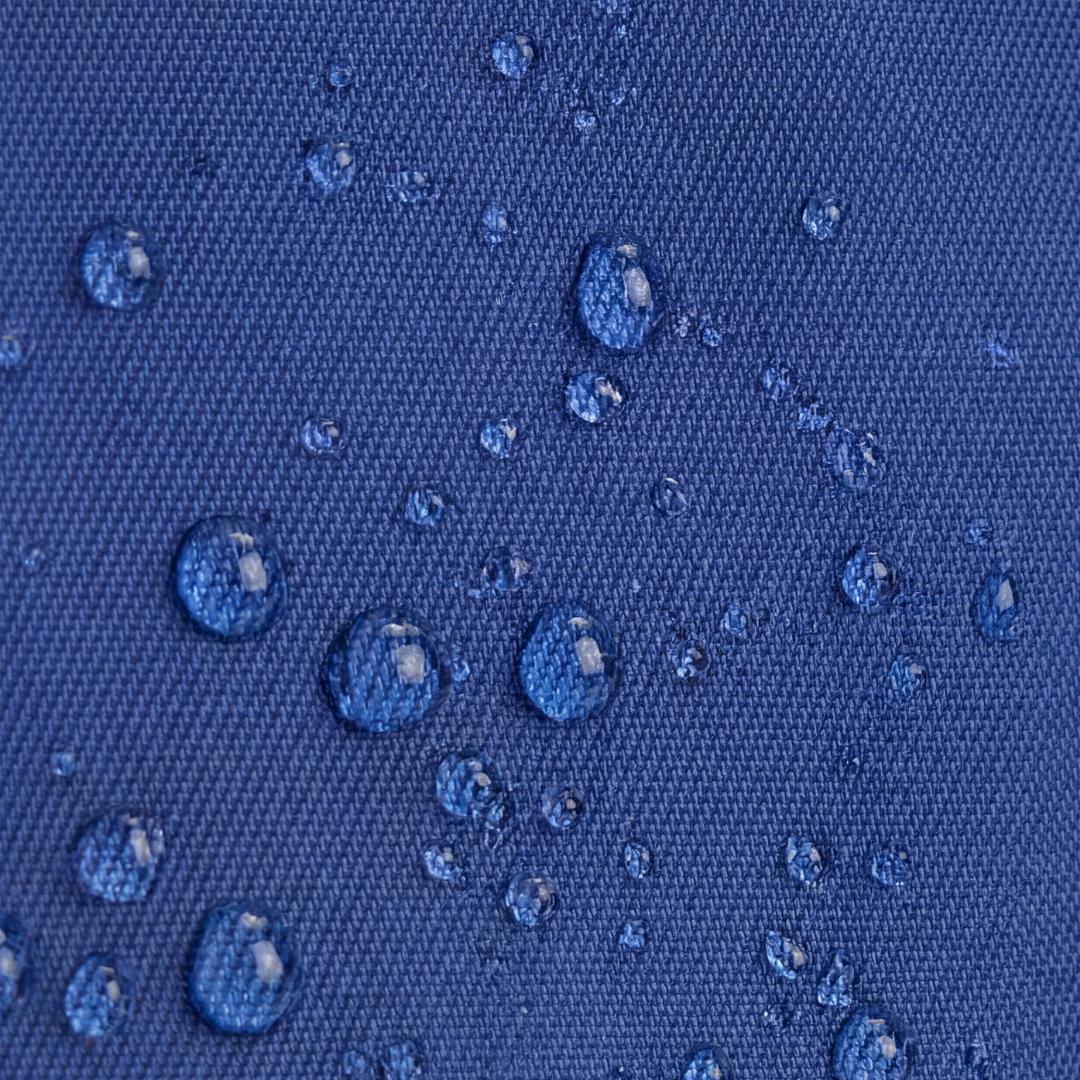
Water-repellent fabric is treated to prevent water from spreading across or quickly soaking into its surface. When water comes into contact with the fabric, it forms small beads that can roll off rather than spreading across the surface.
This effect is commonly achieved through a Durable Water Repellent (DWR) treatment applied to the outer fabric.
For custom bags, water-repellent protection is suitable for products that may encounter occasional splashes, light moisture, or brief exposure to rain.
Common applications include:
- Everyday carry bags
- General-purpose storage bags
- Indoor tool bags
- Light-duty equipment bags
However, water-repellent treatment does not create a waterproof barrier. Under prolonged exposure or heavy rain, water may eventually penetrate the fabric.
For this reason, it is best suited to bags that need basic moisture protection rather than continuous exposure to wet conditions.
2. Water-Resistant: Protection Against Rain and Splashes
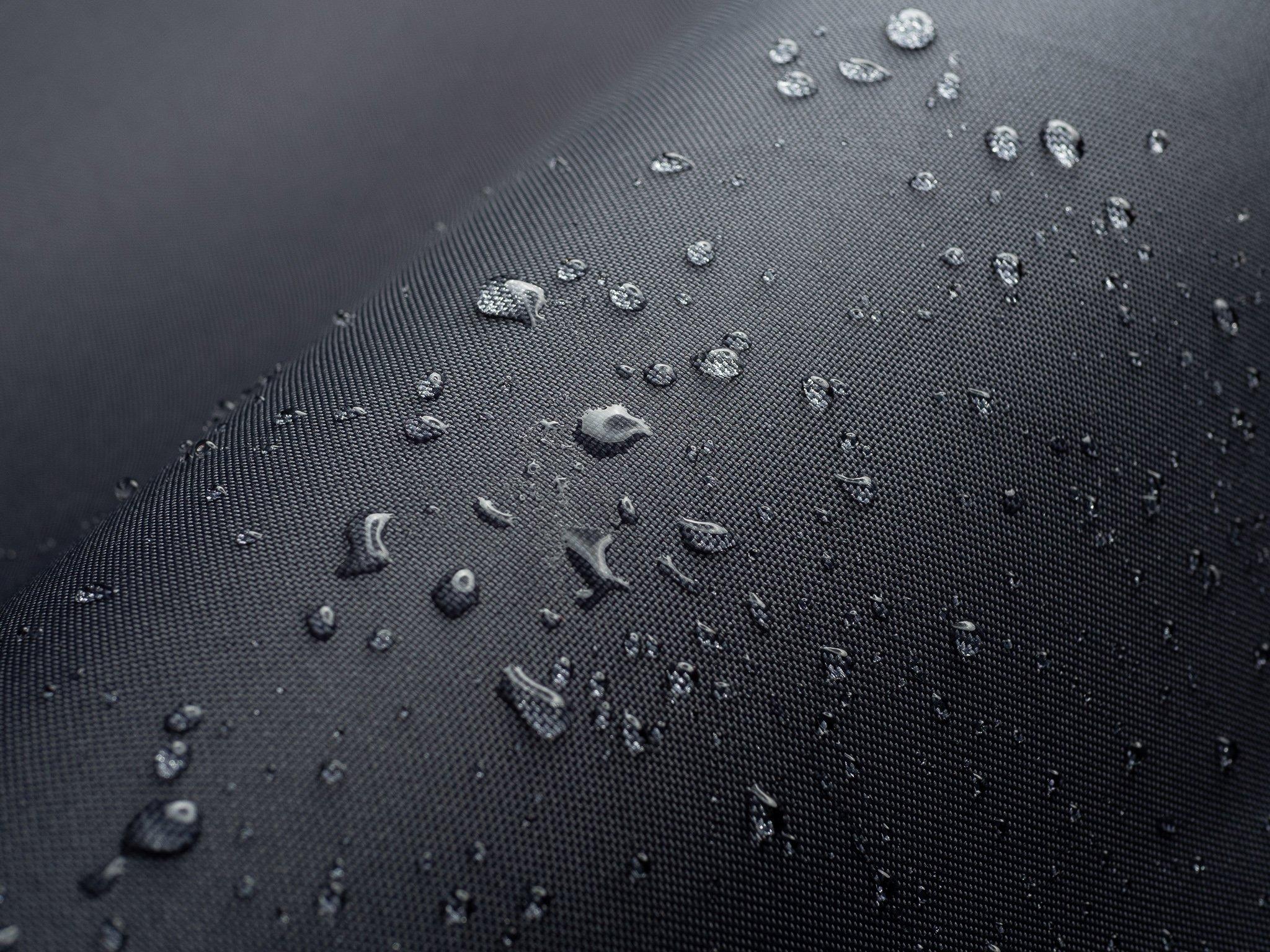
Water-resistant fabric offers a stronger level of protection by slowing or preventing water from passing through the fabric under certain conditions.
This is commonly achieved by applying a PU (polyurethane) or PVC coating to the fabric. The coating creates a barrier that helps prevent water penetration.
Water-resistant construction is widely used in custom tool bags, outdoor equipment bags/storage bags, and heavy-duty carrying bags.
Depending on the intended application, different coating specifications can be selected to achieve the required level of protection.
It is important to understand that water resistance is not a fixed performance level. Different coatings, fabric structures, and construction details provide different results.
The finished bag also needs to be considered as a whole. Even if the main fabric is water-resistant, water may still enter through stitching holes, zippers, seams, and openings.
3. Waterproof: Protection Beyond the Fabric
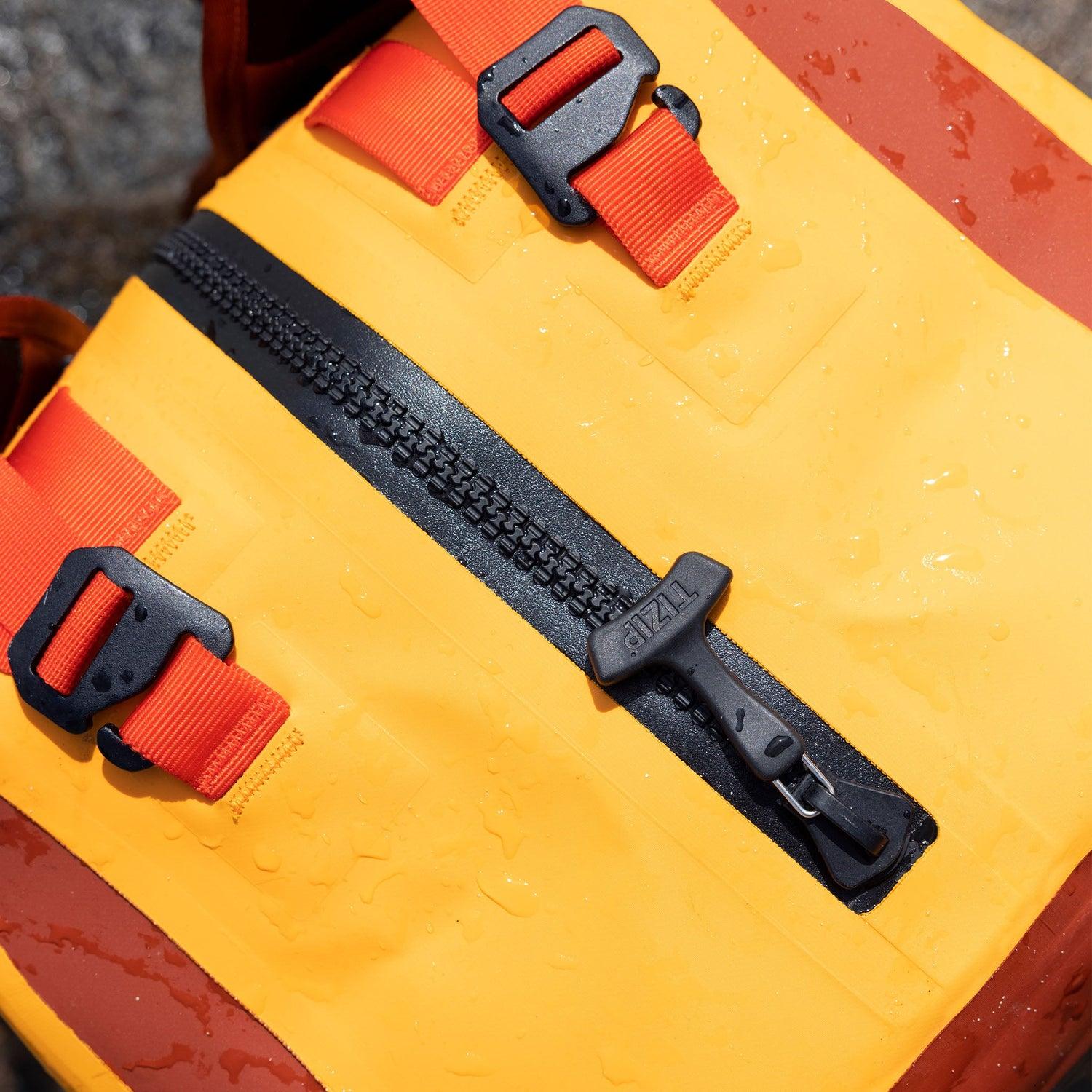
A waterproof product is designed to prevent water from entering under specified testing conditions. Unlike basic water-repellent or water-resistant bags, waterproof products require more attention to the entire bag construction.
Selecting waterproof fabric alone is not enough. Every potential entry point needs to be considered during product development.
Some important construction details include:
- Fabric: PVC and TPU materials are commonly used in applications requiring a higher level of water protection.
- Seams: Regular stitching creates needle holes that may allow water to enter. Seam sealing or welded construction can help reduce leakage.
- Zippers: Standard zippers are not waterproof. Waterproof zippers or protective zipper covers can help reduce water entry.
- Closures: Roll-top closures and other sealing designs provide additional protection, depending on the intended application.
These features are commonly found in dry bags, marine storage bags, and specialized outdoor equipment bags.
One important point is that a bag made with waterproof fabric is not automatically a waterproof bag. If water can enter through the seams, zippers, or openings, the overall protection will be limited.
The required waterproof performance should also be clearly defined. A bag designed to withstand heavy rain may not be suitable for underwater immersion. Specific testing is necessary when immersion protection is required.
4. Comparing Water Protection Levels in Custom Bags
The following table summarizes the general differences between the three types of water protection and their suitability for different bag applications.
|
Feature |
Water-Repellent |
Water-Resistant |
Waterproof |
|
Protection method |
Repels water from the surface |
Slows or prevents water penetration |
Prevents water entry under specified conditions |
|
Light splashes |
Suitable |
Suitable |
Suitable |
|
Light rain |
Limited protection |
Generally suitable |
Suitable |
|
Heavy rain |
Not recommended |
Depends on specifications |
Depends on tested performance |
|
Water immersion |
Not suitable |
Generally not suitable |
Requires specific design and testing |
|
Common applications |
Everyday and indoor bags |
Tool, outdoor, and equipment bags |
Dry bags and specialized marine bags |
These are general guidelines rather than fixed performance ratings. Actual protection depends on the fabric specifications, construction methods, and testing conditions.
5. Choosing the Right Water Protection for Your Custom Bag
Water-repellent, water-resistant, and waterproof materials each serve a different purpose. The right choice depends on how the bag will be used, the level of water exposure it needs to handle, and the expected performance.
For custom bag development, choosing the right fabric is only part of the process. Coatings, seam construction, zippers, and closure designs all play a role in the finished product's water protection.
At Dingfeng, we develop custom bags for various applications, including tool storage, outdoor equipment, and marine use. We work with different fabrics, coatings, and construction methods to find practical solutions based on each project's requirements.
If you are developing a custom bag and need advice on material selection or water protection, feel free to contact our team. We can help you explore suitable options for your product.
The Future of Equipment Storage: Accessibility, Organization, and Workflow
Related Article