A Sourcing Manager's Guide to Custom Bag Prototyping: 3 Ways to Speed Up NPI (New Product Introduction)

In the fast-paced world of retail and brand expansion, the New Product Introduction (NPI) phase is often where projects hit a bottleneck. For sourcing managers, the "Tech Pack to Sample" transition is the ultimate test of a supplier's agility. A delay in sampling doesn't just push back a launch; it risks missing seasonal windows and losing market share.
When your marketing timeline is fixed but the design is still evolving, you don’t just need a factory—you need an R&D partner. Here is how to navigate the custom bag prototyping process and three strategic ways to slash your development lead times.
The Prototyping Pipeline: From Paper to Product
Before diving into speed, it’s vital to understand the standard flow:
- Tech Pack Review: Analysis of materials, hardware, and dimensions.
- Pattern Making: Converting 2D designs into physical templates.
- Material Sourcing: Coordinating with tanneries or fabric mills.
- First Prototype (Counter Sample): The initial "rough draft" to check proportions.
- Refinement & PPS: The Pre-Production Sample that locks in every detail.
3 Ways to Speed Up NPI
1. Shift from "Paper Tech Packs" to DFM Reviews
Many NPI delays occur because a design looks great on a flat PDF but defies the laws of physics when stitched.
A high-tier factory’s R&D team can perform a Pre-Prototyping Audit. Instead of waiting for a physical sample to fail, the R&D team reviews your drawings, they shouldn't just look at aesthetics. They should identify "construction bottlenecks"—seam thicknesses that will break needles or pocket placements that require expensive manual turning. Resolving these on a 2D screen prevents the "failed sample" cycle.
Pro Tip: Providing a 3D mockup or a physical "reference sample" (even if it’s a competitor’s bag with different features) gives the pattern makers a tactile starting point, cutting the first-draft revision time by up to 30%.
2. Leverage an In-House Raw Material Library
Sourcing specific hardware or custom-dyed fabrics often adds weeks to the prototyping clock. To speed up NPI, utilize your manufacturer’s on-site material library.
During the initial sampling phase, don't wait for the exact Pantone-matched fabric to arrive from a sub-vendor. Use "in-stock equivalent" materials for the first iteration to test the fit, form, and function. Once the geometry of the bag is locked in, you can swap in the final aesthetic materials for the Salesman Sample (SMS).
3. Bridge the Gap with an In-House R&D Sample Room
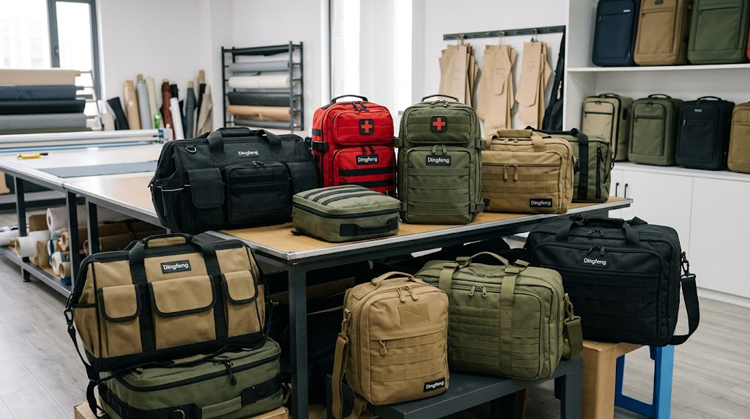
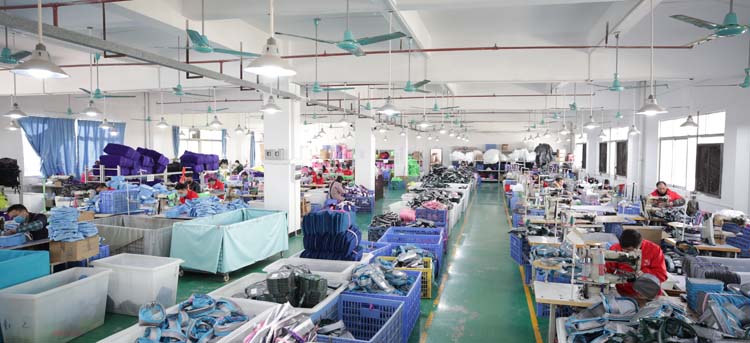
Top-tier manufacturers maintain a dedicated R&D Sample Room—a microcosm of the factory staffed by master pattern-makers and versatile sewers. By engaging with a factory that has a dedicated R&D sample room, you can get real-time feedback. When a technician tells you a specific gusset is too thick for a needle to penetrate, you can approve a design change in minutes. This way, you can solve the puzzles in the sample room so that the mass production phase is nothing but smooth execution.
Expert Quote
"Sourcing managers often focus on the 'per unit' cost, but in the NPI phase, the real currency is iteration speed. A factory’s R&D capability isn't just about sewing—it’s about their ability to interpret a designer’s intent and find technical workarounds for complex gussets or hardware attachments on the first try. If you save two weeks in sampling, you gain two weeks of peak-season sales."
— Leo Chen, Head of Technical R&D with 18+ years of experience in custom bags.
FAQ
Q1: How long should a standard custom bag prototype take?
A: Typically, a first counter-sample takes 7 to 10 business days. However, if custom-molded hardware or specific pantone-dyed material is required, this can extend to 3–4 weeks. Using "stock-supported" materials for the first draft can cut this to under 7 days.
Q2: What are the minimum requirements to start the prototyping process?
A: At a minimum, you need a 2D technical drawing with dimensions, a Bill of Materials (BOM), or a reference sample or "inspiration" bag to communicate the desired "hand-feel" and structure.
Q3: Why do production bags sometimes feel different than the prototype?
A: This usually happens when the prototype was made by a master "Sample Maker" using different machinery than the mass production line. To avoid this, ensure your factory’s R&D team uses production-grade templates and machines during the final sampling stage.
Ready to accelerate your next custom bag launch? Reach out to discuss your project—we're here to help turn your drawings into market-ready products faster.
Back to Work 2026: Custom Bag Manufacturing Resumes After Spring Festival
Total Cost of Ownership: Why Cheap OEM Bags Cost More in the Long Run
Related Article